Understanding the Industry Standard Before You Buy
When you're looking at buying a pallet wrapping machine, one thing becomes very clear very quickly — there are a lot of different terms being thrown around.
Manual, semi-auto, automatic, fully automatic… and sometimes even terms that frankly don’t make a lot of sense.
Thankfully, over time the industry has settled on a fairly consistent definition for what a semi automatic pallet wrapper actually is. Understanding this properly is critical, because it ensures you’re comparing machines correctly and not being misled by marketing terminology.
What is a Semi Automatic Pallet Wrapper?
A semi automatic pallet wrapping machine is a machine that requires some level of operator interaction, but automates the actual wrapping process.
In simple terms, the operator handles the start and finish — and the machine does the rest.
A true semi automatic wrapper follows a very clear process:
- The operator places the pallet onto the machine
- The operator attaches the stretch wrap to the pallet
- The operator presses start
- The machine wraps the pallet automatically
- The operator cuts the wrap off at the end
That’s it.
There should be no further interaction required during the wrapping cycle. Once started, the machine completes the wrap consistently every time using preset parameters.
Why This Definition Matters
This might sound obvious, but in the market we still see machines labelled as “semi automatic” that really aren’t.
If a machine requires you to:
- Manually raise or lower the carriage
- Hold buttons throughout the wrap cycle
- Use a lever to control movement
- Operate a foot pedal or winch system
- Or worse — physically guide the wrap by hand
Then you are no longer looking at a true semi automatic machine.
That is a manual or semi-manual system.
A proper semi auto machine should only require input at the start and finish — nothing in between.
How a Semi Automatic Pallet Wrapper Works
At its core, all pallet wrappers follow the same basic principle.
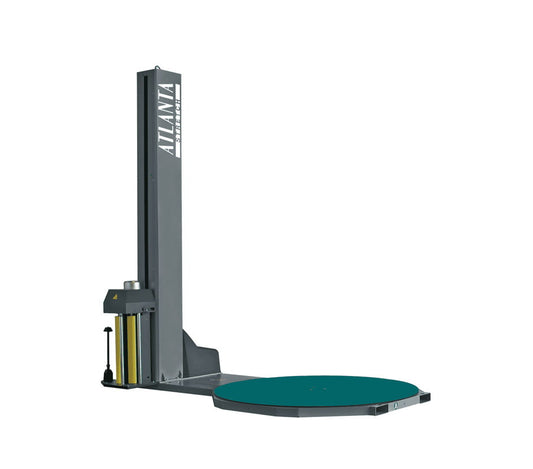
The machine rotates the pallet (or moves the film carriage around it), applying stretch film in a consistent pattern to secure the load.
Here’s how that process looks in real operation:
Step 1: Load the Pallet
The pallet is placed onto the turntable, usually by forklift or pallet jack.
Step 2: Attach the Film
The operator ties or clamps the stretch film to the base of the pallet.

Step 3: Press Start
The wrapping cycle is initiated via a button or control panel.

Step 4: Automatic Wrapping Cycle
The machine takes over completely:
- The turntable rotates
- The film carriage moves up and down
- The pallet is wrapped evenly from bottom to top
This creates a consistent, repeatable wrap every time.

Step 5: Cut the Film
Once the cycle is complete, the operator cuts the film and removes the pallet.

Our video shows exactly how a semi automatic pallet wrapper should operate — minimal input, consistent output, and no manual interference during the cycle.
MPS Semi Automatic Pallet Wrapper Range
EVA, Synthesi & Mytho S Explained
When it comes to semi automatic pallet wrappers, MPS Packaging Australia has built its range around one key principle — reliable, industrial machines that suit every level of operation.
Rather than offering dozens of confusing models, the MPS range is built around a clear progression:
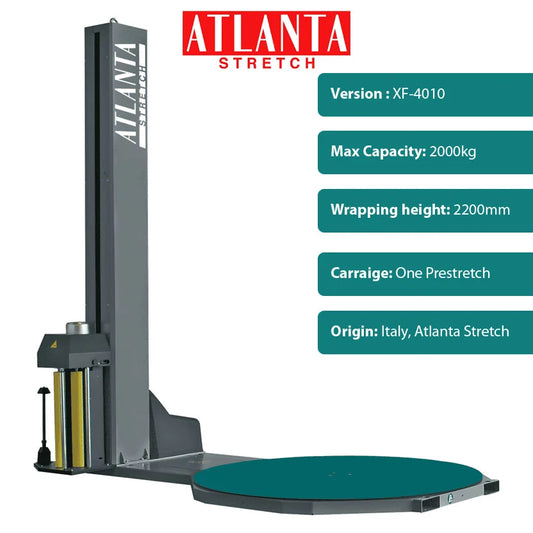
All based on Atlanta Stretch Italian-built platforms, known for durability, modular design, and long-term reliability.
Why MPS Focuses on Semi Automatic Wrappers
Semi automatic pallet wrappers are the most popular machines in Australia — and for good reason.
They provide:
- Consistent wrapping every time
- Reduced film usage
- Improved load stability
- Lower labour compared to hand wrapping
At MPS, these machines are designed to be easy to operate, highly durable, and suited to real warehouse conditions.
Entry Level: EVA Pallet Wrapper
Simple, Affordable & Reliable
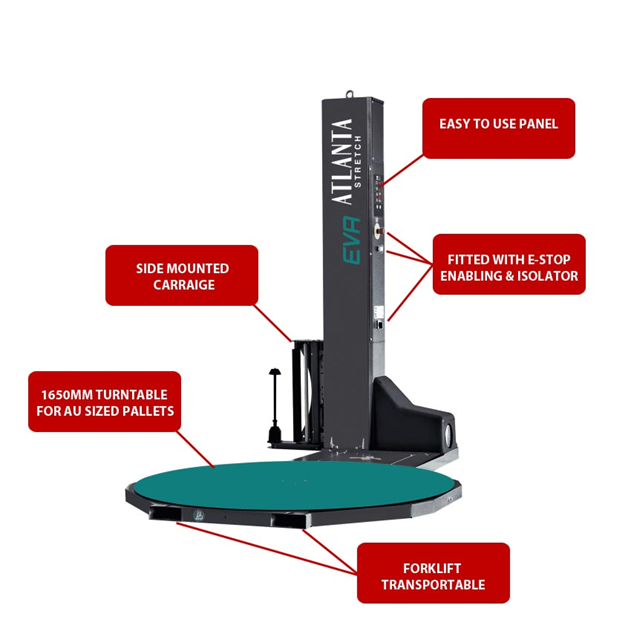
The EVA is your starting point into machine wrapping.
It’s built for businesses currently hand wrapping or doing low volumes, and want a simple, cost-effective upgrade.
Key Features
- Mechanical brake carriage (simple and low cost)
- Easy-to-use button panel
- Basic wrapping programs
- Minimal setup required
The EVA is designed as a “first step” machine, ideal for lower volumes (typically under ~15 pallets per day).
Where It Fits
If you’re currently hand wrapping and doing:
- 5–15 pallets per day
- Standard pallet sizes
- No need for film optimisation
The EVA is a perfect entry point.
Mid Range: Synthesi Pallet Wrapper
The Workhorse of the Industry
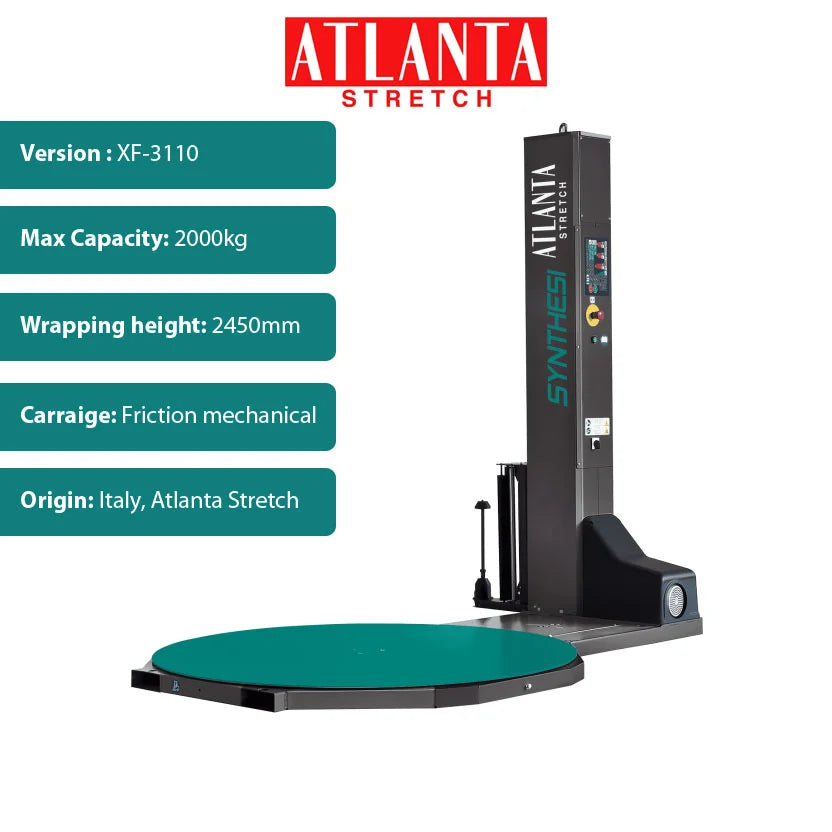
The Synthesi is where most MPS customers land.
This is a true industrial machine, designed for reliability, flexibility, and long-term use.
Key Features
- 2000kg turntable capacity
- Heavy duty motor and gearbox
- Multiple carriage options (FM, FE, PRS)
- Adjustable wrapping parameters
- Reinforcement wraps and programmable cycles
Why It’s So Popular
The Synthesi gives you:
- Better film control
- Higher wrap consistency
- Ability to upgrade later
This is where you move from “basic wrapping” to controlled, repeatable packaging performance.
Where It Fits
- 15–40+ pallets per day
- Businesses wanting to reduce film costs
- Operations needing reliability and flexibility
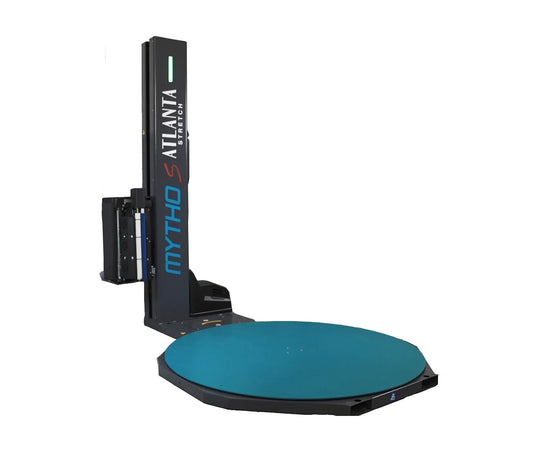
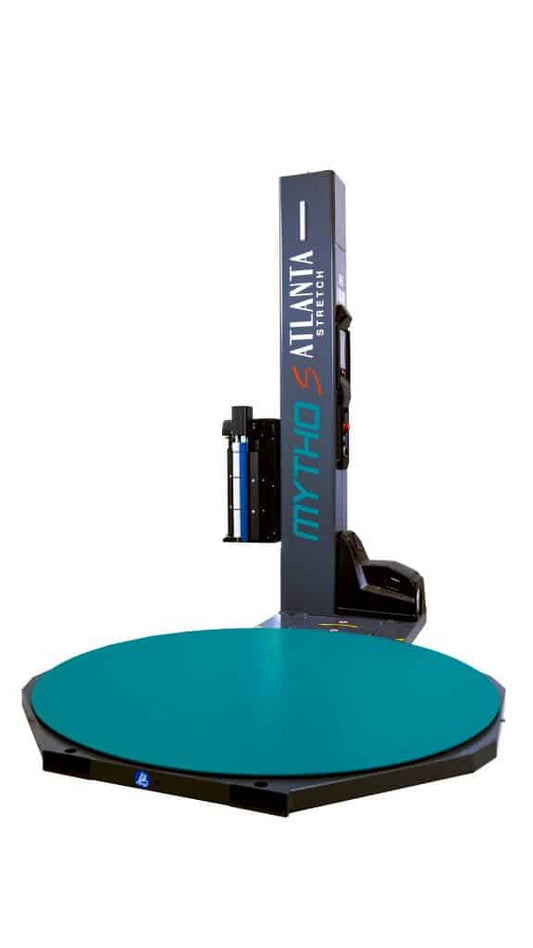
Premium: Mytho S Pallet Wrapper
High Performance, Low Maintenance Platform
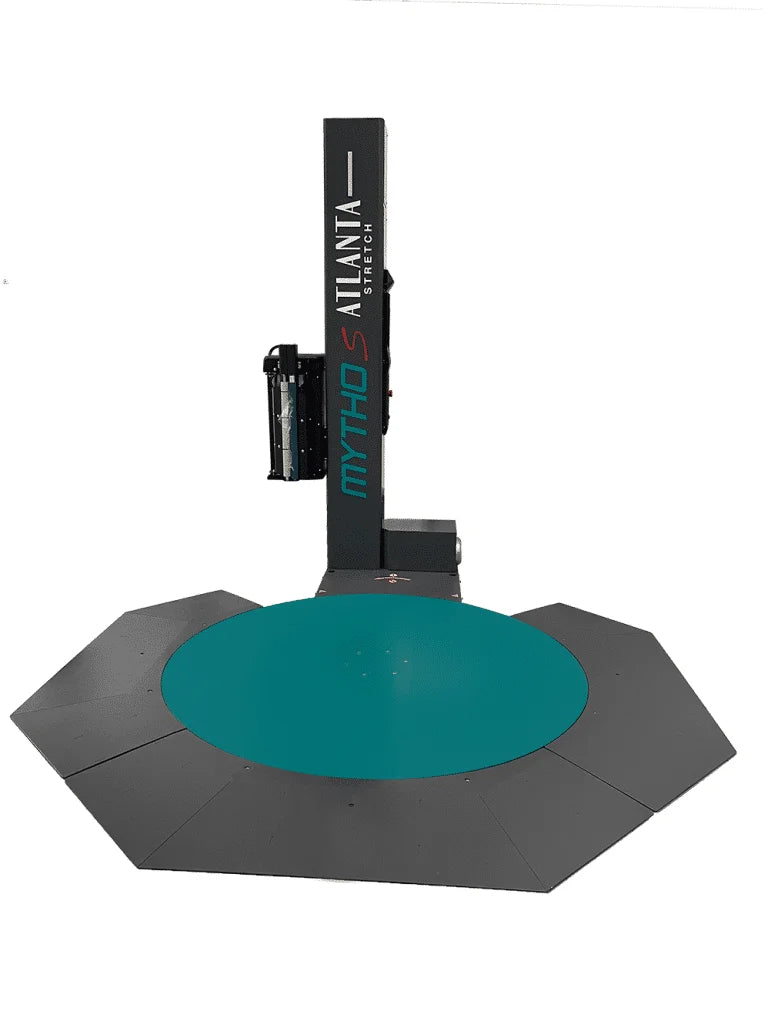
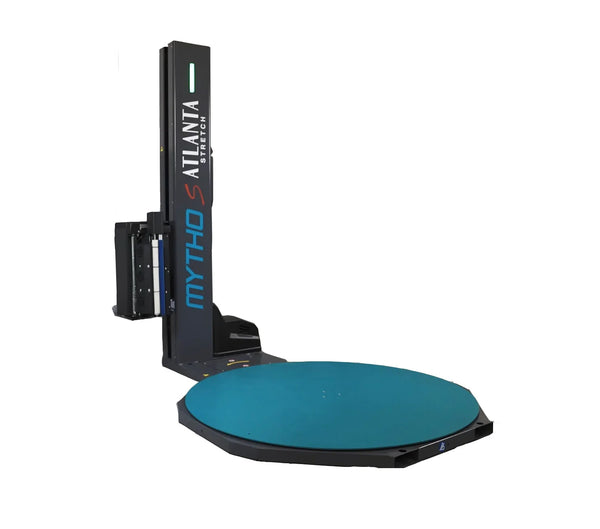
The Mytho S is the top-end semi automatic platform in the MPS range.
This machine is designed for high-volume operations that want performance without moving into full automation.
Key Features
- Fully modular platform
- Advanced pre-stretch systems (PRS, PS, etc.)
- Reduced maintenance design
- Heavy duty industrial build
- Upgradeable to automatic systems
One of the biggest advantages of the Mytho platform is its ability to evolve with your business — carriages, features, and systems can be upgraded over time without replacing the entire machine.
Where It Fits
- 30–100+ pallets per day
- Businesses focused on film savings
- Operations wanting long-term scalability
What Makes the MPS Range Different?
One of the biggest advantages of the MPS pallet wrapper range is that it is built on Italian manufacturing from Atlanta Stretch, a globally recognised and proven manufacturer. These machines are not built to a price point—they are built for long-term performance. The overall build quality is significantly higher than entry-level alternatives, with reliable electronics and well-engineered components designed to handle continuous use in demanding warehouse environments.
Another key benefit is the modular design of the machines. Rather than being locked into a fixed configuration, customers have the ability to upgrade their machine over time. Carriages can be changed, features such as top press units or scale systems can be added, and the machine can evolve alongside the business. This greatly extends the usable lifespan of the equipment and avoids the need for full replacement as requirements grow.
Across the range, MPS machines utilise true industrial-grade components, including trusted electrical systems from brands such as Siemens and Omron, along with heavy-duty gearboxes and chain-driven mechanisms. These are not light-duty or consumer-grade parts—they are selected specifically for durability, reliability, and ease of servicing in real-world applications.
All of this contributes to a significantly lower cost of ownership over time. Parts are readily available, there are no restrictive proprietary components, and the machines are designed with serviceability in mind. This means less downtime, lower repair costs, and a machine that can continue operating reliably for many years.
Choosing the Right Machine
The choice comes down to volume, budget, and expectations:
| Machine | Best For | Key Advantage |
|---|---|---|
| EVA | Low volume | Cheapest entry point |
| Synthesi | Medium volume | Best balance of cost & performance |
| Mytho S | High volume | Maximum performance & upgradeability |
A semi automatic pallet wrapper is a machine that automates the wrapping process but still requires minimal operator input. The user places the pallet on the machine, attaches the stretch film, and presses start. The machine then wraps the pallet automatically using preset parameters, before the operator returns to cut the film and remove the pallet.
In simple terms, the operator handles the start and finish, while the machine does the actual wrapping. This provides consistent load stability, reduces film usage, and improves efficiency compared to hand wrapping, without the complexity or cost of a fully automatic system.