Before investing in a pallet stretch wrapper, it's worth taking the time to make sure you're buying a machine that actually suits your operation. While many wrappers look similar on paper, the wrong choice can lead to reduced productivity, damaged equipment, unnecessary film costs, or even finding out your pallets simply don't fit on the machine.
At MPS Packaging Australia, we regularly speak with customers who have purchased a pallet wrapper elsewhere, only to discover it doesn't meet their requirements. Here are seven important things you should check before choosing your next pallet wrapping machine.
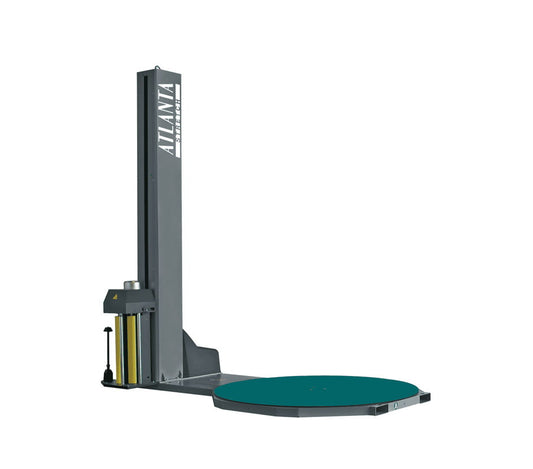
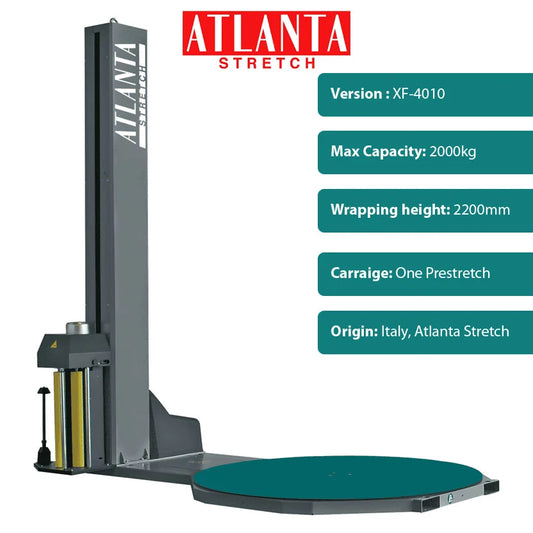
1. Will Your Pallets Physically Fit on the stretch wrapper's Turntable?
The first and arguably most important consideration is the size of the pallets you intend to wrap.
Most Australian businesses work with standard 1165 x 1165 mm or 1200 x 1200 mm pallets, and most pallet wrappers are designed around these dimensions. However, if you regularly wrap oversized loads, cabinetry, plasterboard, long products, machinery, or custom pallets, you need to ensure the turntable is large enough.
A pallet that hangs excessively over the edge of the turntable can become unstable during rotation and may even contact the mast or carriage.
Before purchasing, consider:
- Your largest pallet length and width
- Future oversized products you may introduce
- Whether a larger diameter turntable is available
- Whether an extended base or rotating arm machine would be more suitable
Choosing the correct turntable size from the beginning is considerably cheaper than replacing an undersized machine later.

2. Check the Wrapping Height — Not the Mast Height
One of the biggest mistakes buyers make is comparing mast heights rather than the machine's actual wrapping height.
These are not the same thing.
A machine may have a 2400 mm mast but only provide 2000 mm of usable wrapping height once allowances are made for the carriage and sensors.
As a general guide, your machine should comfortably exceed your tallest pallet.
Ideally, choose a wrapper with a maximum wrapping height at least 100 mm higher than your tallest load, although allowing around 200 mm provides more flexibility for future products.
For example:
- 1800 mm pallet → choose at least a 2000 mm wrapping height.
- 2200 mm pallet → consider a 2400 mm or 2700 mm wrapping height.
Always ask for the maximum wrapping height specification rather than relying on overall machine dimensions.

3. Is the Weight Capacity High Enough?
Every pallet wrapper has a maximum turntable capacity.
Although many standard machines comfortably handle 1500–2000 kg, heavier industrial applications may require higher capacities.
Think about your heaviest pallet, not your average one.
Industries such as:
- Bricks
- Steel
- Paper
- Beverage
- Timber
- Engineering
can regularly exceed standard capacities.
Running a machine above its rated capacity accelerates wear on bearings, motors, chains and drive systems while potentially voiding warranty.
Always choose a machine with sufficient capacity for both your current and future loads.

4. How Many Pallets Will You Wrap Each Day?
The number of pallets you wrap every day has a huge impact on which stretch wrapper represents the best value.
Someone wrapping five pallets a day has very different requirements to a warehouse wrapping 150 pallets every shift.
A lower-cost machine may be perfectly adequate for occasional use, but once pallet volumes increase, you'll appreciate:
- Faster wrapping cycles
- Improved reliability
- Better operator ergonomics
- Reduced downtime
- Stronger construction
Buying purely on price often becomes expensive when production increases.
If your business expects to grow, buying slightly larger than today's requirements is usually a wise investment.

5. Consider Powered Prestretch if You Wrap More Than 30 Pallets Per Day
Stretch film is an ongoing operating cost, often far exceeding the purchase price of the machine over its lifetime.
If you're wrapping more than around 30 pallets per day, a powered prestretch stretch wrapper is well worth considering.
Powered prestretch systems use two driven rollers to stretch the film before it reaches the pallet, allowing one metre of film to become two, three or even four metres depending on the machine.
The advantages include:
- Significant film savings
- Lower packaging costs
- More consistent wrapping
- Reduced film breakages
- Better load containment
- Less operator adjustment
Although powered prestretch machines cost more initially, many businesses recover the additional investment surprisingly quickly through reduced film consumption alone.

6. Think Carefully About How You'll Load the stretch wrapper
Loading is something many buyers overlook until installation day.
How will pallets actually get onto the wrapper?
Will you use:
- A pallet jack?
- A forklift?
- A reach truck?
- A walkie stacker?
- Double pallet movers?
- Electric pallet movers?
Each loading method has different requirements.
If using pallet jacks, you'll likely require a loading ramp or a low-profile pallet wrapper.
Forklifts generally require adequate access around the machine.
Walkie stackers introduce additional considerations regarding their front support legs, meaning not every pallet wrapper is suitable. Likewise, double pallet movers and specialist handling equipment may require larger turntables or alternative loading arrangements.
It's far easier to select the correct machine than modify your warehouse afterwards.

7. Consider the Environment the Machine Will Operate In
Not every pallet wrapper is destined for a clean warehouse.
Many operate in demanding environments including:
- Freezers
- Cold stores
- Food processing plants
- Outdoor loading areas
- Wash-down facilities
- Coastal environments
- Chemical plants
These applications may require additional protection such as:
- Cold-weather kits
- Galvanised construction
- Stainless steel machines
- Sealed electrical cabinets
- Silicone or low-temperature cables
- Corrosion-resistant components
Specifying the correct machine from the outset dramatically improves reliability and reduces maintenance over the machine's life.

Choosing the Right Pallet Wrapper Saves Money
Buying a pallet wrapper isn't simply about choosing the cheapest machine available. It's about selecting equipment that suits your products, warehouse layout, pallet handling methods and expected production volumes.
A wrapper that is correctly sized and specified will provide years of reliable service while reducing labour, improving load security and minimising stretch film usage.
At MPS Packaging Australia, we help businesses match the right machine to their application rather than simply selling the most expensive model. By considering pallet size, wrapping height, weight capacity, daily throughput, prestretch technology, loading methods and operating environment, you can invest with confidence knowing your pallet wrapper will continue to meet your requirements as your business grows.