Using a walkie pallet stacker to load pallets onto a pallet stretch wrapper can sometimes present challenges, depending on the design of both the stacker and the wrapping machine.
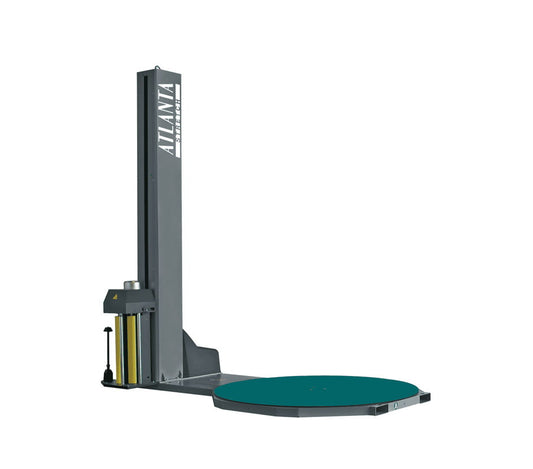
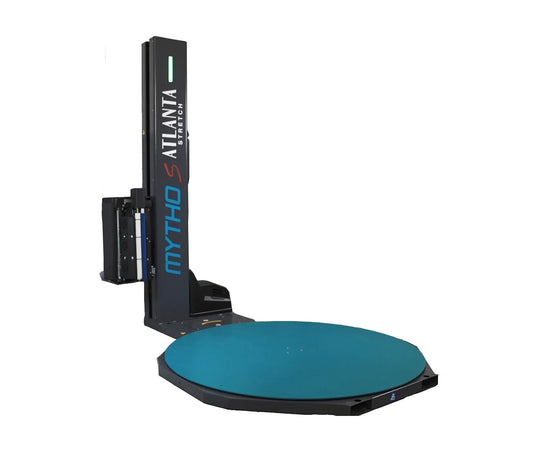
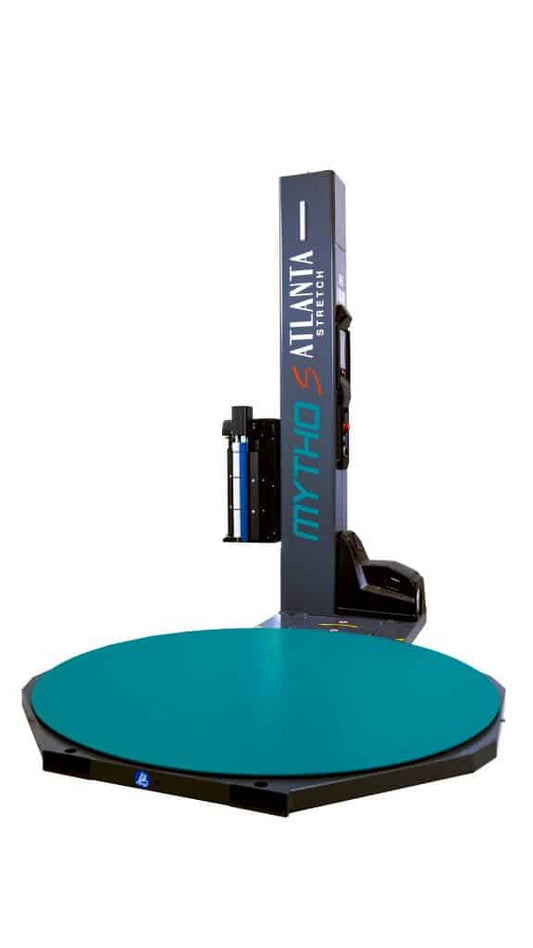
Most walkie pallet stackers are built with front support legs, typically spaced around 1300mm apart. These legs provide stability when lifting loads but can interfere when loading pallets onto a pallet wrapper. Standard pallet wrappers generally have a turntable diameter of around 1500mm to 1650mm, which means the stacker’s support legs can prevent the pallet from being positioned close enough to the centre of the turntable.
Here's an awfully rendered AI image of the problem, the front supports hit the turntable before the pallet gets adequately on the turntable.

If the pallet cannot be placed near the center, the wrapper may struggle to wrap the load correctly, or the pallet may sit partially off the turntable, which is unsafe.
Reach Stackers Solve the Problem
If your walkie stacker has reach capabilities, this issue is usually not a problem. Reach stackers allow the forks to extend forward beyond the support legs, meaning the pallet can still be positioned correctly on the turntable without the legs interfering.
However, if your walkie stacker does not have reach functionality, it may not be suitable for loading a standard pallet wrapper.
Solution 1 – Use a Pallet Stretch Wrapper with a Ramp
One of the simplest options is to load the pallet wrapper using a pallet jack instead of the walkie stacker. Many pallet wrappers are available with loading ramps, allowing operators to roll pallets directly onto the turntable.
This solution works well in environments where pallets do not need to be stacked high after wrapping.

Solution 2 – Use a Lifting Frame on a stretch wrapper
Another option is to use a lifting frame or raised pallet platform. This allows the walkie stacker to drive its support legs underneath the pallet, enabling the forks to position the pallet onto the wrapper correctly.
This setup is often used in warehouses where walkie stackers are the primary lifting equipment and replacing them with forklifts or reach stackers is not practical.

This is form one of our previous installs where we used our scale frame to lift the wrapper up.
Solution 3 – Recess the Stretch Wrapper into the Floor
Another option is to install the pallet wrapper recessed into the floor. By digging a pit and installing the wrapper flush with the warehouse floor, pallets can be placed directly onto the turntable without needing a ramp.
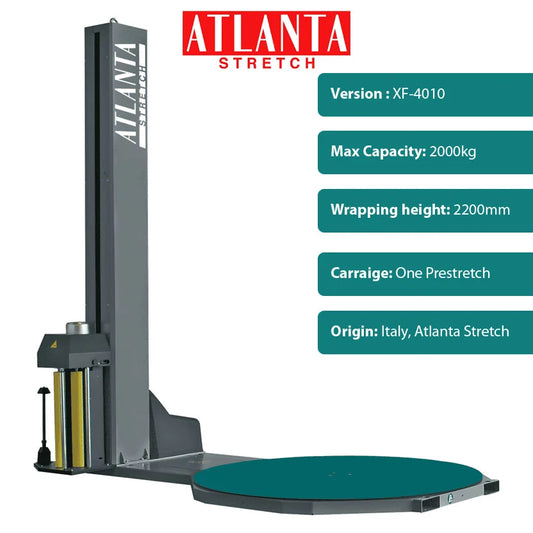
If you plan to install a pallet wrapper in this way, it is important to select a heavy-duty machine, typically with a 2000kg load capacity or higher. Machines installed into the floor are more likely to experience shock loads from forklifts, pallet jacks, or stackers placing pallets onto the turntable, so a stronger structure and drivetrain is recommended.
Solution 4 – Use a Low Profile Turntable (With Caution)

Low-profile pallet wrappers are another option, with turntables typically 18mm to 25mm high, allowing pallet jacks to easily roll pallets onto the wrapper.
However, our advice is not to drive heavy equipment onto low-profile turntables. Forklifts, reach trucks, and even pallet movers can place excessive load on the turntable bearing and drive components.
While some suppliers may advertise these machines as the “perfect pallet wrapping solution” for forklifts or stackers, the reality is that very low turntables were primarily designed for pallet jack loading.
Even with atlanta heavy heavier-duty bearings and superior belt drive system, we generally do not recommend driving reach trucks, forklifts, or stackers onto turntables that are 25mm high or lower. Doing so can lead to premature wear of bearings and drivetrain components(Other machines use ~$2000 gears instead of belts as a drive system), potentially resulting in costly repairs such as bearing replacements or gear failures, which can run into the thousands of dollars over time.
For most operations using low-profile wrappers, the safest and most reliable approach is simply to load the machine using a pallet jack instead of powered lifting equipment.
Solution 5 – Use a long ramp with a walkie stacker and your stretch wraper
Another possible option is to install a large loading ramp and drive the walkie stacker directly onto the pallet wrapper. For this to work safely, the ramp would need to be quite long, typically at least 3 metres in length, to maintain a manageable incline and avoid grounding the stacker. While this can work in some warehouses, it requires additional floor space and careful consideration of the wrapper’s load capacity and structure.
Conclusion.
In our experience the most practical and reliable solution for walkie stackers without reach capability is the use of a lifting frame. A lifting frame allows the stacker legs to pass underneath the pallet, enabling the forks to position the pallet directly onto the turntable without interference. This solution allows businesses to continue using their existing walkie stacker while ensuring pallets can still be loaded safely and centred correctly on the wrapper.