When investing in a pallet wrapping machine, one of the most common questions we get at MPS Packaging Australia is:
“Will the machine automatically detect the height of my pallet?”
The short answer is — yes, most modern pallet wrappers do automatically detect pallet height.
However, like most things in packaging, the detail is where it really matters.
How Automatic Height Detection Works
On the majority of pallet wrappers, height detection is handled by a photoelectric sensor, commonly referred to as a photo eye or infrared sensor. This sensor is mounted directly onto the carriage and travels up and down with the film roll during the wrapping cycle.
As the carriage rises, the sensor continuously scans the load. Once it detects the top of the pallet, it signals the machine to stop ascending and begin the top wrap sequence. This process happens automatically and in real time, meaning the operator does not need to input any height settings or make manual adjustments between loads.
The system works by emitting a beam, typically infrared, and detecting how that beam interacts with the surface of the product. When the sensor recognises a change that indicates the top of the load, it triggers the next stage of the wrap cycle.

Why This Matters for Variable Height Pallets
In real-world warehouse and distribution environments, pallet heights are rarely consistent. Loads can vary significantly depending on the product, stacking method, transport requirements, and storage constraints.
Because of this, modern pallet wrappers are designed to handle variable height pallets automatically. The sensor measures the actual load height on every cycle, allowing the machine to adapt without requiring reprogramming or operator input.
Whether a pallet is relatively low or stacked to maximum height, the machine will adjust accordingly. This ensures that every load is wrapped correctly, regardless of variation, which is critical for maintaining consistency across operations.

What the Sensor Is Doing During the Wrap Cycle
There is often a misconception that the sensor only detects the height once and then the machine continues from memory. In reality, most systems are continuously reading the load as the carriage moves.
As the cycle begins, the operator attaches the film and starts the machine. The carriage then rises, scanning the load as it goes. When the sensor detects the top, the machine transitions into the top wrap phase before reversing direction and completing the downward wraps.
This continuous feedback is what allows the machine to maintain accuracy. Without it, the wrapper could either stop short of the load, leaving it exposed, or travel too high and waste film. Both scenarios lead to inefficiencies, either in load stability or material usage.
Infrared vs Black Sensors — Why It Matters
While most pallet wrappers include automatic height detection, not all sensors perform equally. This is where the difference between entry-level machines and higher-quality systems becomes clear.
Standard infrared sensors are suitable for most light-coloured or reflective loads such as cardboard cartons and typical palletised goods. However, they can struggle when faced with darker surfaces. Black pallets, black plastic drums, or loads already wrapped in black film can absorb the infrared signal rather than reflect it, making detection unreliable.
To overcome this, many higher-end machines utilise what is commonly referred to as a black sensor. These sensors are specifically designed to detect darker surfaces more reliably, ensuring consistent performance across a wider range of applications. On premium machines, this is often included as standard rather than an optional upgrade.
We discuss this further in one of our previous blogs, do i need a black sensor on a pallet wrapping machine?
Alternative Detection Methods for Difficult Loads
In more specialised situations, ultrasonic or sonic sensors can be used. Unlike photoelectric sensors, these do not rely on light at all. Instead, they detect objects using sound waves, which allows them to perform effectively even when dealing with irregular shapes or minimal surface area.
This becomes particularly useful when wrapping products such as chairs, metal frames, or other open structures where a standard sensor may struggle to maintain a stable reading. Because ultrasonic sensors detect within a cone-shaped field, they are able to compensate for gaps and inconsistencies in the load.
Common Issues with Height Detection
Although automatic height detection is a reliable system, issues can still occur if the machine is not set up correctly or maintained properly. In many cases, problems arise from incorrect sensor positioning, detection ranges being set too high, or interference from surrounding objects.
Environmental factors can also play a role. Direct sunlight, dust buildup, or physical damage to the sensor can affect performance. One of the most common signs of an issue is when a machine continues to travel upward without stopping, which is typically linked to the sensor not detecting the load correctly.
Do All Pallet Wrappers Include This Feature?
Nearly all modern pallet wrappers, including semi-automatic machines, come equipped with some form of automatic height detection. However, the quality, reliability, and accuracy of that system can vary significantly depending on the machine.
MPS WRAPPERS Advantage
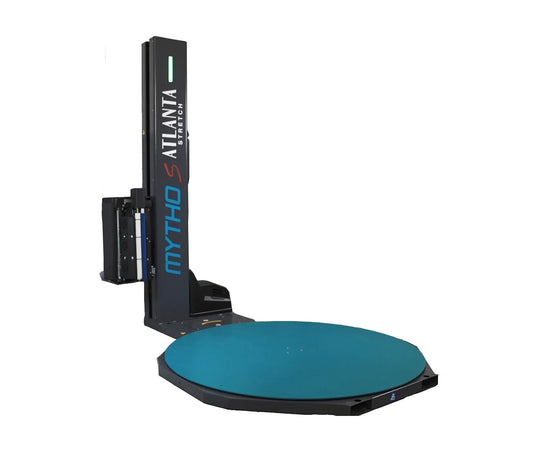
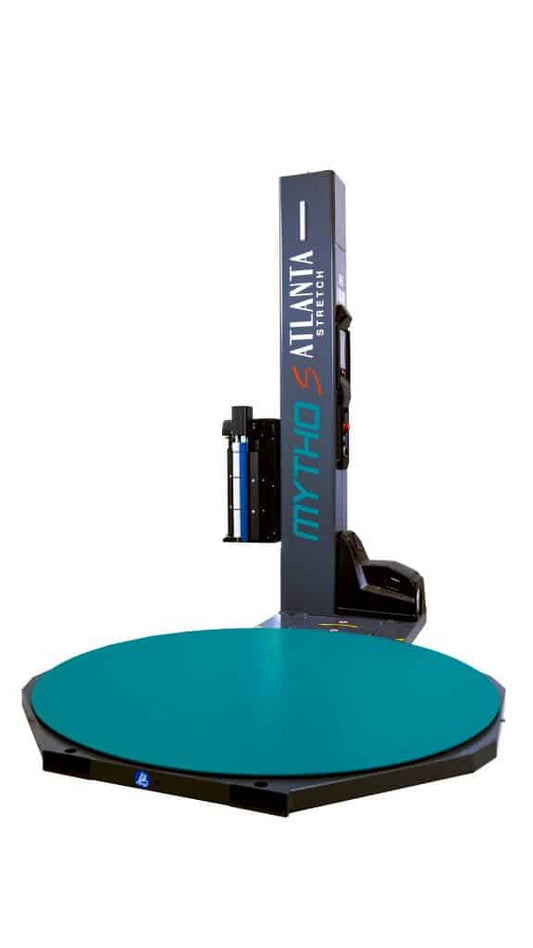
On MPS Packaging Australia’s Atlanta Stretch pallet wrappers, the height detection system can be easily overridden or disabled directly from the control panel, giving operators far greater flexibility when wrapping non-standard loads. Instead of relying solely on the photo sensor, the machine can be set to run to a fixed height or predefined wrap zone, allowing you to intentionally wrap only part of a pallet, such as banding through the middle for load stabilisation, or even wrapping two pallets stacked or positioned together as a single unit. This is particularly useful in applications where full-height wrapping isn’t required, or where products vary too much for consistent sensor detection. Because Atlanta machines are built with fully adjustable programs and user-friendly controls, switching between automatic height detection and manual height settings is quick and repeatable, making it a practical feature for operations handling mixed or unconventional loads.
This is done by changing function 12 to a higher number and setting the pallet height

Does the film type matter for height detection?
When it comes to height detection, the type of stretch film generally doesn’t make a significant difference, as almost all pallet wrap is made from LLDPE and will behave similarly under a standard photoelectric sensor. Whether you are using machine film, hand film, cast, or blown wrap, the sensor is primarily reading the load itself rather than the film. The main exception to this is black stretch film, which can affect detection if the machine is trying to read through or off a dark surface. Black film absorbs light rather than reflecting it, which can make it harder for standard infrared sensors to detect the top of the load, particularly if you are rewrapping pallets or working with already dark products. In these cases, a black sensor or alternative detection method may be required. Outside of that, the actual type, brand, or grade of stretch film has very little impact on how the height detection system performs.
So, will a pallet wrapper automatically detect height?
The answer is yes, provided it has a height detection sensor equiped and it is one of the most essential features of any modern machine.