When choosing a pallet wrapping machine, one option that is often discussed is the black sensor. While many pallet wrappers already include a standard height detection sensor, which is typically infrared based certain products and pallet types can make those sensors unreliable. This is because an infrared sensor cant tell the difference between black and nothing when detecting the height of a pallet. In these situations, a black sensor becomes an important upgrade.
Understanding how these sensors work—and when they are required—can help ensure your pallet wrapper performs correctly in your application.
How Standard Pallet Wrapper Sensors Work

Most pallet wrapping machines supplied through use a standard infrared height sensor. This sensor detects the top of the pallet load by reflecting infrared light off the product as the film carriage travels up the mast.
For most pallet loads this works extremely well. The sensor detects the top of the load, and once reached, the machine automatically switches from wrapping upwards to its top sheet cycle. wrapping downwards.
This allows the wrapper to automatically adjust to different pallet heights without manual settings, making the machine faster and easier to operate.
However, infrared sensors rely on reflecting light off the surface of the load, which means some pallet types can make detection difficult.
When a Standard Sensor Struggles

Infrared sensors can struggle to detect very dark or black surfaces. This includes loads such as:
- Black drums
- Black painted boxes or equipment
- Dark plastic pallets
- Very dark shrink or stretch wrapped goods
Because black materials absorb infrared light rather than reflecting it, the sensor may not detect the load correctly. When this happens, the Pallet wrapper may just stop at the bottom of the pallet and never go upwards.
In these cases, a black eye sensor is recommended.
What a Black Eye Sensor Does
A black eye sensor is designed to detect pallet height even when the product is dark or non-reflective.
Rather than relying on standard infrared reflection, it uses a more sensitive detection method that allows the pallet wrapper to recognise the top of the load even on materials that absorb light.
Rewrapping Pallets with Black Stretch Wrap

Another situation where a black eye sensor becomes very useful is when rewrapping pallets that are already wrapped in black stretch film.
Technically, a standard infrared sensor should still work when applying black stretch wrap, because the sensor detects the product above the stretch film layer rather than the film itself.
However, in practice there are many situations where operators need to rewrap pallets that are already fully wrapped in black film. In this case the infrared sensor may struggle to detect the load correctly.
For this reason, even when using black pallet wrap, we generally recommend installing a black eye sensor. It provides greater reliability and ensures the wrapper will still detect pallet height correctly when rewrapping loads.
A Small Feature That Prevents Big Problems
A black eye sensor may seem like a small feature, but it can prevent common wrapping issues such as:
- The carriage not going up when wrapping dark goods.
- Incorrect wrap cycles
- Operators needing to manually stop the machine
- works better in poor light situations
-
Inconsistent wrapping on dark products
When wrapping dark goods or rewrapping black film pallets, having the correct sensor installed ensures the pallet wrapper continues operating smoothly.
How much extra is a black eye sensor?
Another question customers often ask is how much extra a black eye sensor costs. In reality, the upgrade is usually quite affordable compared to the cost of the pallet wrapper itself. On many machines the black eye sensor can be added as a small upgrade, typically around $550, depending on the manufacturer and machine configuration. If the sensor is being supplied as a higher-quality industrial component or purchased outright, the cost can be $600, especially when premium brands such as SICK are used. Industrial photoelectric sensors from manufacturers like SICK commonly retail in the $200 to $500+ range depending on the model and sensing distance, which reflects the reliability and durability expected in industrial automation equipment.
What is the black sensor still doesn't work for my goods?
Another option when both a standard infrared sensor and a black eye sensor struggle is to use a sonic (ultrasonic) sensor. These sensors detect objects using sound waves rather than light, which means they are not affected by colour, reflectivity, or transparency. We have used ultrasonic sensors in situations where customers are wrapping products such as chairs, metal frames, or other open-style loads where there is very little surface area for a normal sensor to detect. In these cases, the standard sensor can “flutter” because it keeps losing and finding the edge of the product as the carriage travels upward. An ultrasonic sensor solves this by sensing in a cone-shaped detection field, rather than a narrow beam. This wider sensing area allows the machine to reliably detect the top of irregular loads even when the product has gaps or thin structures, ensuring the pallet wrapper can complete the wrapping cycle without constantly searching for the top of the load.
Is a black sensor ever included as standard?
Another question that often comes up is whether black eye sensors are ever included as standard on pallet wrappers. In many cases they are not included on basic machines, however on higher-end or premium pallet wrappers they are often supplied as standard equipment. For example, on our PPS (Power Pre-Stretch) machines, a black eye sensor is typically included because these machines are designed for more demanding or varied wrapping applications.
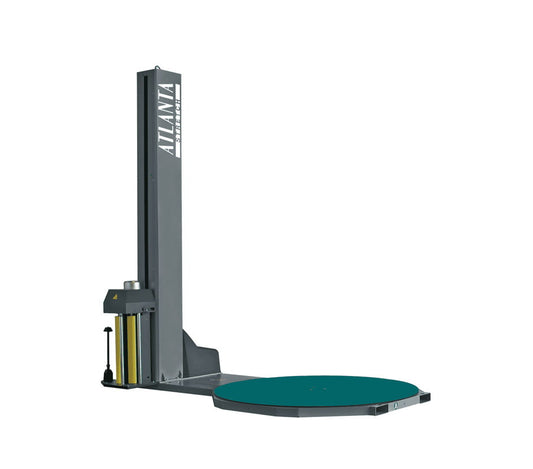
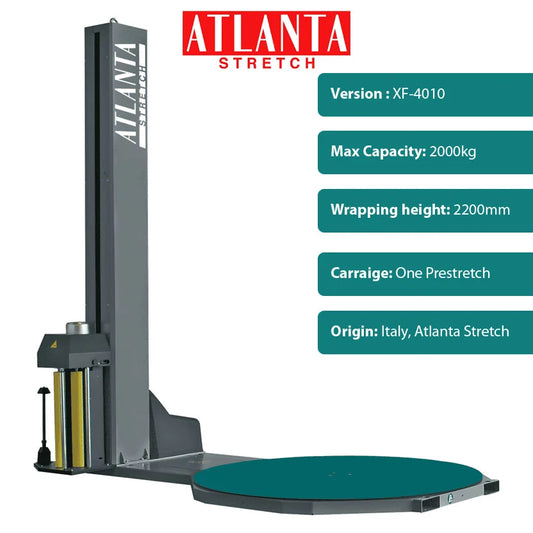
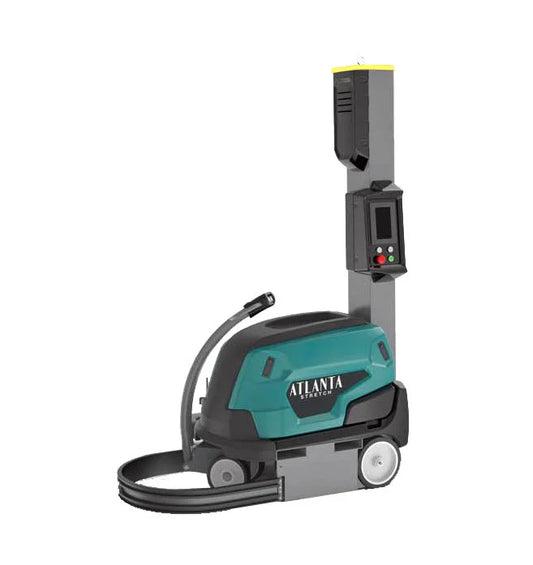
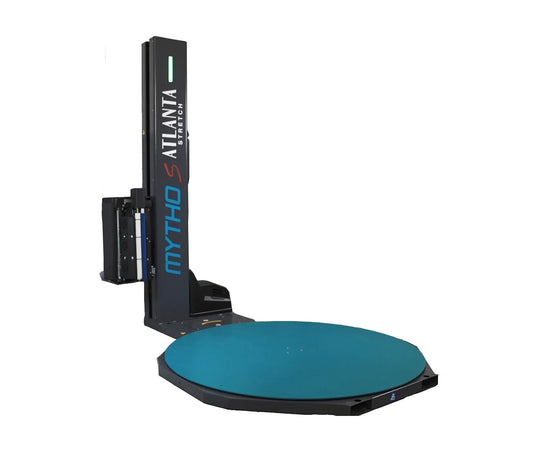
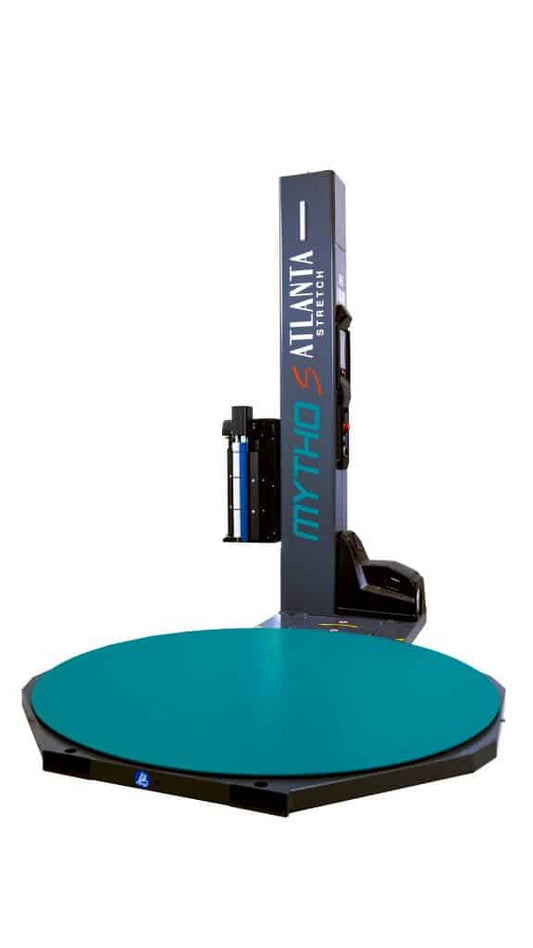
A good example is the Mytho S pallet wrapper from Atlanta Stretch, where the black eye sensor is supplied as standard on many configurations.
Choosing the Right Setup
For most applications, the standard infrared height sensor found on pallet wrappers works perfectly. But if your operation regularly handles black drums, dark products, or pallets wrapped in black film, adding a black eye sensor is a simple upgrade that can significantly improve reliability.
Making sure your pallet wrapper has the correct sensors from the start will help avoid operational issues and ensure the machine performs consistently in your warehouse.