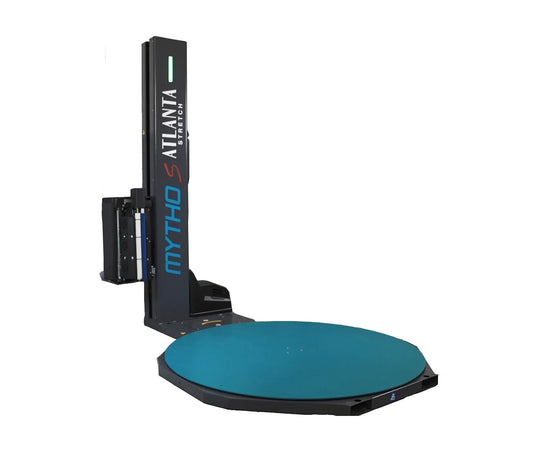
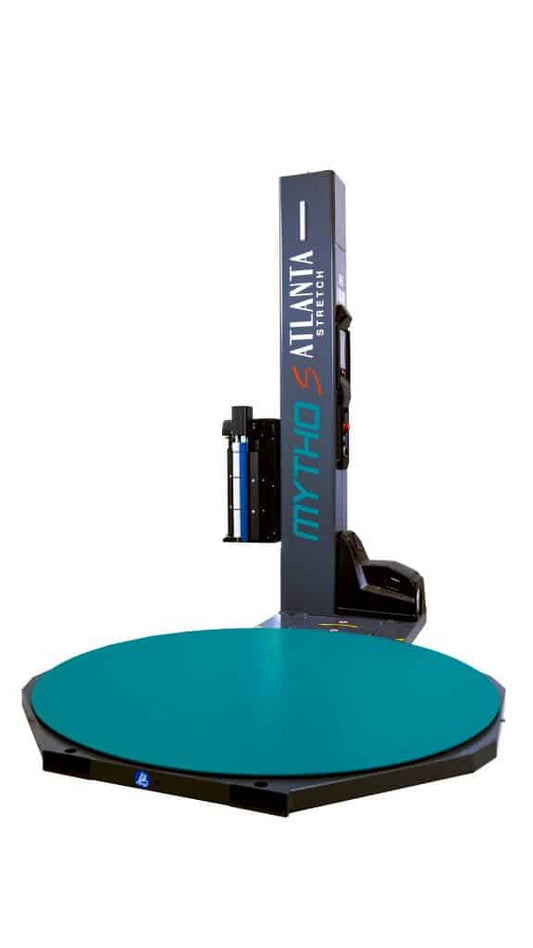
When shopping for a pallet wrapping machine, one of the biggest decisions businesses face is whether to invest in a Chinese-made pallet wrapper or an Italian-made machine. At first glance, they can appear remarkably similar. Many Chinese manufacturers have modelled their machines on successful European designs, often taking inspiration from established Italian or American manufacturers.
However, while the overall appearance may look comparable, the engineering hidden beneath the covers tells a very different story.
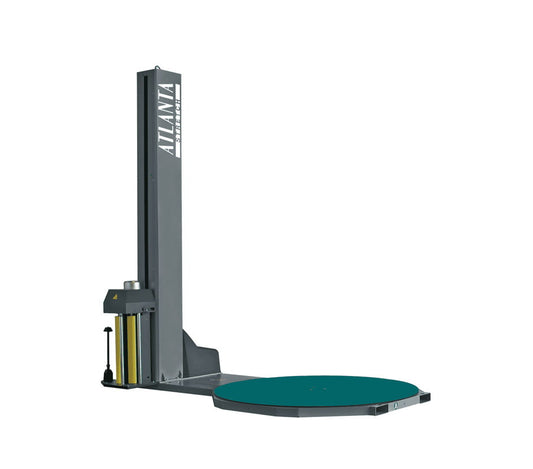
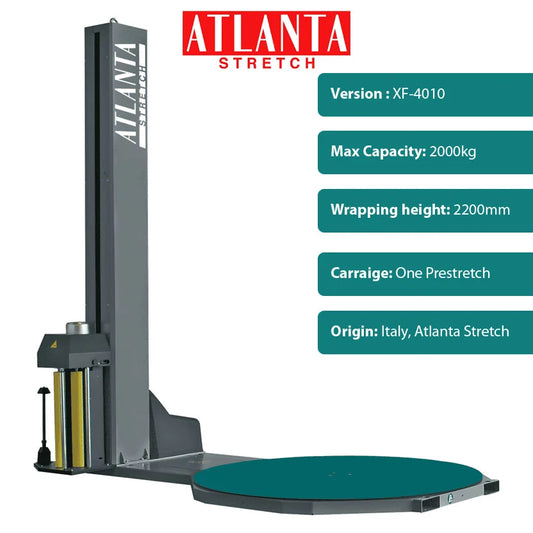
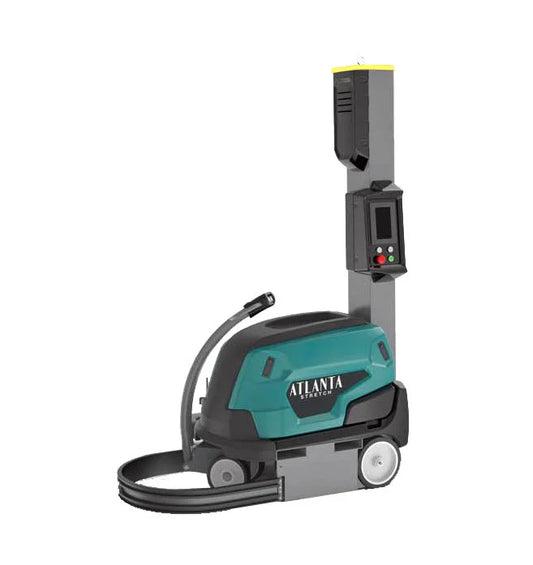
It's important to note that not every Chinese pallet wrapper is poorly built. There are manufacturers producing reasonable equipment for entry-level applications. Likewise, not every Italian machine is automatically superior simply because of where it is made. This comparison looks specifically at a premium Italian-built machine, such as an Atlanta Stretch pallet wrapper, against the simplified designs commonly found throughout the Chinese market.
The difference isn't usually in what you can see. It's in the quality of the engineering, the components selected, the way the machine is designed for maintenance, and ultimately how reliably it performs after years of continuous operation.
MPS offers deeper insights and knowledge not usually given or even known by other companies.
Built to a Price vs Built to Perform
Many Chinese pallet wrappers are designed with one goal in mind: achieving the lowest possible manufacturing cost.
That doesn't necessarily make them bad machines. For businesses wrapping only a handful of pallets each day, they may perform adequately.
However, to reach these lower price points, manufacturers often substitute premium components for lower-cost alternatives, simplify electronic systems, reduce machining tolerances and eliminate features that improve reliability over the long term.
Italian manufacturers such as Atlanta Stretch take a different approach. Rather than designing purely around manufacturing cost, they engineer machines to provide consistent performance, long service life and low maintenance costs over many years.
The purchase price may be higher, but the lifetime ownership cost is often considerably lower.
The Difference is in the Components
Most buyers judge a pallet wrapper by the turntable, mast and film carriage because those are the visible parts. In reality, the quality differences are often hidden inside the machine.
Hall Effect Film Tension Control
One of the biggest differences can be found inside the powered pre-stretch carriage.
Atlanta Stretch uses a Hall Effect sensor to continuously monitor film tension. This magnetic sensor provides an analogue voltage signal to the powered pre-stretch motor, allowing the carriage to constantly adjust film delivery as pallet conditions change.
The result is smoother wrapping, more consistent film tension and significantly fewer film breakages.
Because the system is continuously adjusting, loads receive even containment force regardless of pallet size, corners or changing film resistance.
Many lower-cost wrappers instead rely on far simpler systems or fixed motor speeds that cannot react as accurately to changing conditions.
The difference may only become obvious after thousands of pallets, where consistent film performance translates into reduced film usage, fewer operator interruptions and improved load security.

Safety Door Interlocks
Another hidden difference is operator safety.
Atlanta Stretch machines use proper industrial safety interlock switches on guarded access doors.
Unlike a simple microswitch, an interlock safety switch physically locks into position and is specifically designed for industrial machinery.
These switches are:
- Much harder to accidentally damage
- Far more difficult to bypass
- Better suited to harsh industrial environments
- Designed specifically to comply with machinery safety standards
Many budget pallet wrappers instead use ordinary mechanical microswitches.
Although these can perform the same basic function, they are generally more susceptible to wear, impact damage and accidental adjustment. In some cases they can even be bypassed far more easily, reducing the effectiveness of the machine's safety system.

Polyurethane Rollers vs Rubber Rollers
The powered pre-stretch carriage is one of the hardest working parts of any pallet wrapper.
Film passes over these rollers thousands of times every day, generating constant friction.
Atlanta Stretch uses precision polyurethane rollers throughout its powered pre-stretch systems.
Polyurethane offers several advantages over conventional rubber:
- Excellent wear resistance
- Superior cut resistance
- Greater dimensional stability
- Longer service life
- Consistent grip over time
Rubber rollers found on many lower-cost machines gradually harden, wear or develop flat spots. As they age, film tension becomes less consistent and roller replacement becomes more frequent.
While polyurethane rollers cost more to manufacture, they are designed to provide many years of reliable operation with minimal maintenance.

Rubber wrapped rollers left, polyurethane right
Electrical Components Matter
Another area rarely considered during purchase is the electrical hardware hidden inside the control cabinet.
Premium Italian manufacturers generally specify industrial components from globally recognised suppliers.
These components are designed for continuous industrial operation and offer excellent long-term parts availability.
Many lower-cost machines instead use generic electrical components that may work perfectly when new but can become difficult to source years later if replacements are required.
For businesses intending to keep a pallet wrapper for ten or fifteen years, this can become a significant advantage.


Italian left, Chinese right.
Engineering Beyond the Specification Sheet
Looking at two specification sheets may suggest that two pallet wrappers are almost identical.
Both might offer powered pre-stretch.
Both might wrap at similar speeds.
Both may have similar mast heights.
But specification sheets rarely describe how the machine achieves those figures.
The engineering behind motor control, film carriage design, structural rigidity, software programming and maintenance accessibility all contribute to the overall ownership experience.
These are the areas where experienced Italian manufacturers continue to distinguish themselves.
Lower Maintenance Over the Life of the Machine
A pallet wrapper is a long-term investment.
The initial purchase price is only one part of the overall cost.
Maintenance, downtime, spare parts and film efficiency often have a much greater financial impact over the machine's working life.
Premium machines are typically engineered to reduce:
- Film breakages
- Component wear
- Service requirements
- Unplanned downtime
- Spare parts replacement
For businesses wrapping hundreds of pallets every week, these savings quickly outweigh the initial purchase price difference.
Choosing the Right Machine
There is certainly a place in the market for entry-level Chinese pallet wrappers. Businesses with low production volumes or occasional wrapping requirements may find they adequately meet their needs.
However, for operations where reliability, film savings and long-term ownership costs are important, premium Italian-built pallet wrappers continue to justify their reputation.
At MPS Packaging Australia, we have chosen to partner with Atlanta Stretch because their engineering philosophy aligns with our own—quality components, proven reliability and machines built to perform for decades rather than simply achieving the lowest purchase price.
When comparing pallet wrappers, don't just compare the specifications or the purchase price.
Ask what components are inside the machine.
Ask how the powered pre-stretch system controls film tension.
Ask what safety systems have been used.
Ask what the rollers are made from.
Because in pallet wrapping, it's often the parts you can't see that make the biggest difference.